
by Odile Sullivan-Tarazi
(Ed. note: Odile Sullivan-Tarazi sits on the board of Independent Publishers of New England (IPNE), a sister organization of BAIPA, where she chairs the book awards program. She’s sharing this profile of one author, his work, and his experience with the awards program.)
The first line came to him as he was biking to the office.

R.C. Binstock
That hadn’t happened since he’d begun pulling together his first short story collection, some thirty years before, when the opening passages of several of the tales-to-be popped into his mind, seemingly unbidden, on long walks to and from work. Now, all these years later, in the solitary streets of lockdown, in an eerily vacant city, the writing was once again percolating to the surface, calling to him. Robert (R.C.) Binstock hadn’t set out to write a collection of pandemic stories, but they were fully in train, clamoring to be heard as 2020 waned and lengthened into 2021.
Reflecting on the experience of confronting and writing about our pandemic times, he wrote at the time that “terrible as the consequences have been for so many and surreal as the experience has been for virtually all of us, it’s ultimately the same old battle against helplessness — the helplessness of being persistently sick or in pain, of not having the rent money, of being mistreated and held back because of the way you look, speak, love, or see yourself, of feeling down or frustrated all the time and not knowing why, of grief and a milling other miseries. In other words, the unalterable nature of our existence, which is always about how we see ourselves, every minute of the day.”
This is grist for our mill.
“The wonder of fiction,” he wrote, “is that it can take an often overwhelmingly opaque and unknowable experience, being human, and make it transparent and comprehensible, reassuring us that maybe we can get a leg up on it now and then.” Short stories, with their compression, their constraints, are fertile ground for the seeds of story. As for the pandemic, it offered perhaps the perfect frame for a particularly existential collection, a narrative exploration, in the shadow of uncertainty and death, in the new and frightening become numbingly quotidian, of what it means to be human.
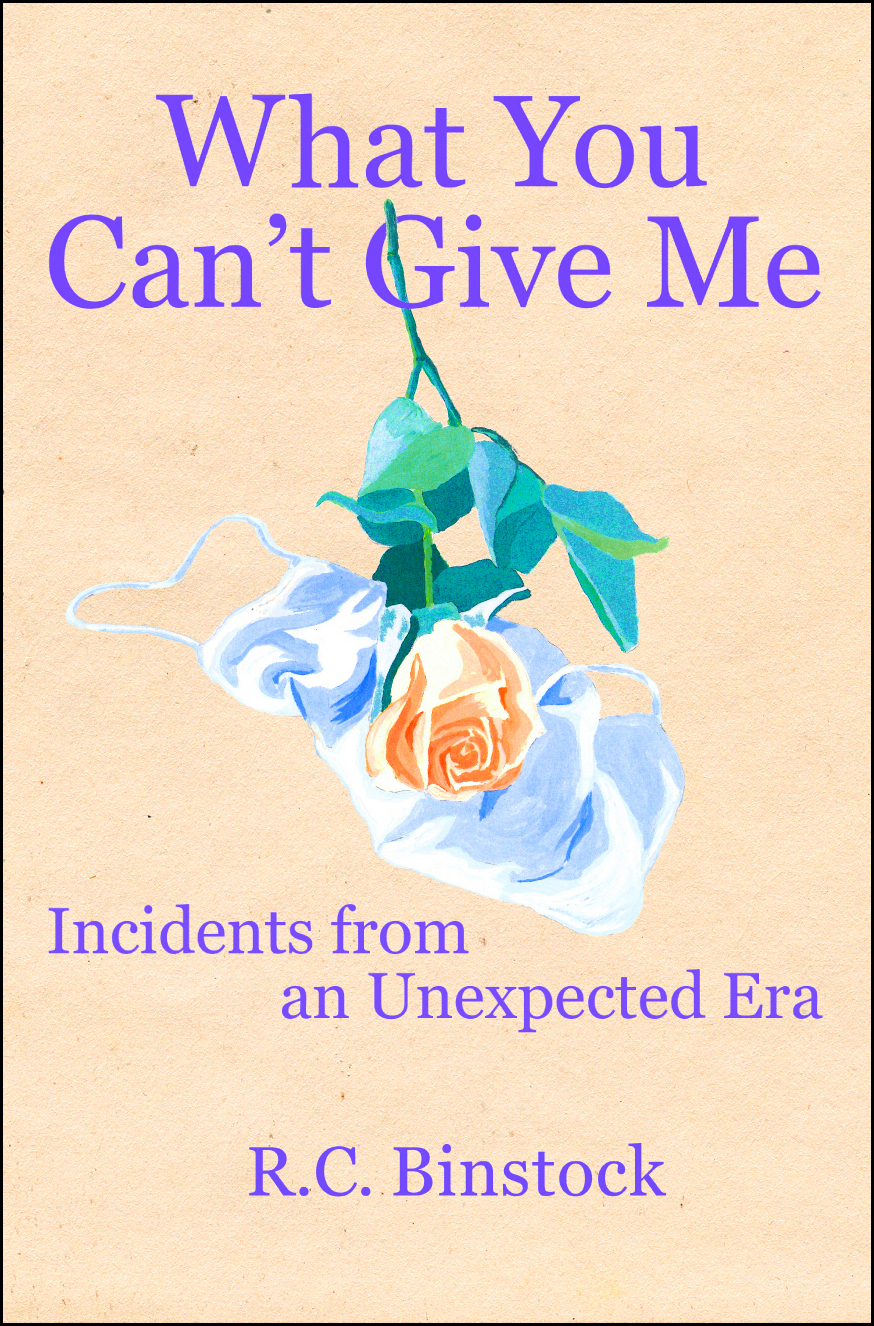
 “I’ve always been powerfully attracted to hidden sorrow, unknown grief,” Robert says today. His novels bear witness to that. And the stories in this collection, What You Can’t Give Me: Incidents from an Unexpected Era, bear witness as well. Our judges called the collection — with its close interior views and delicate choreography — absorbing, frank, intimate. Moving portraits of individuals coping with crisis and navigating uncertainty. A sobering chronicle of the pandemic.
“As a self-published author who has been going it alone for many years,” Robert says, “I was thrilled to discover IPNE and the community it represents. To be recognized by the organization for the quality of my work is enormously gratifying.”
That quality comes from patience, discipline, passion, skill. From what he terms “the delicate balance” between the artist’s creative and critical faculties. From following where the creative leads, trusting to that process, those insights, until it’s time to hold the work up to a different light, consider it through a different lens. Generating in one mode. Refining and polishing in another. And you don’t wait for the muse to come: you schedule that writing time.
If Robert Binstock is pragmatic about one aspect of writing, he’s wholly transcendent about another: what we make of the art in our lives, how it nourishes and sustains us. “The purpose of art,” he says, “is joy, sorrow, remembrance, fear, satisfaction, chaos, and home. Whatever you need to do to get at it, doing so is the most wonderful thing in the world.”
So is reading it, this transporting art spun of words.
Author


One of my favorite things about BAIPA is its culture of generosity, the willingness — even eagerness — to share what we have each learned in the process of bringing stories to life. We provide educational programs, networking, marketing opportunities, encouragement, and information on industry vendors and services. And lots of one-on-one advice and mentoring.
We welcome all who have an interest in making connections within the world of independent publishing and learning more about how to publish and sell their work successfully. Together we are raising the standard of independent publishing and helping our members thrive.
Do join us!
—Becky Parker Geist, BAIPA Board of Directors, President
Quick Resources
Current BAIPA members do not need to register for our monthly meetings. The night before the meetings, they will receive the Zoom info. For workshop registration, currently, members get in free for all workshops and will receive the Zoom info the night before the meetings, as well as in the confirmation email.